
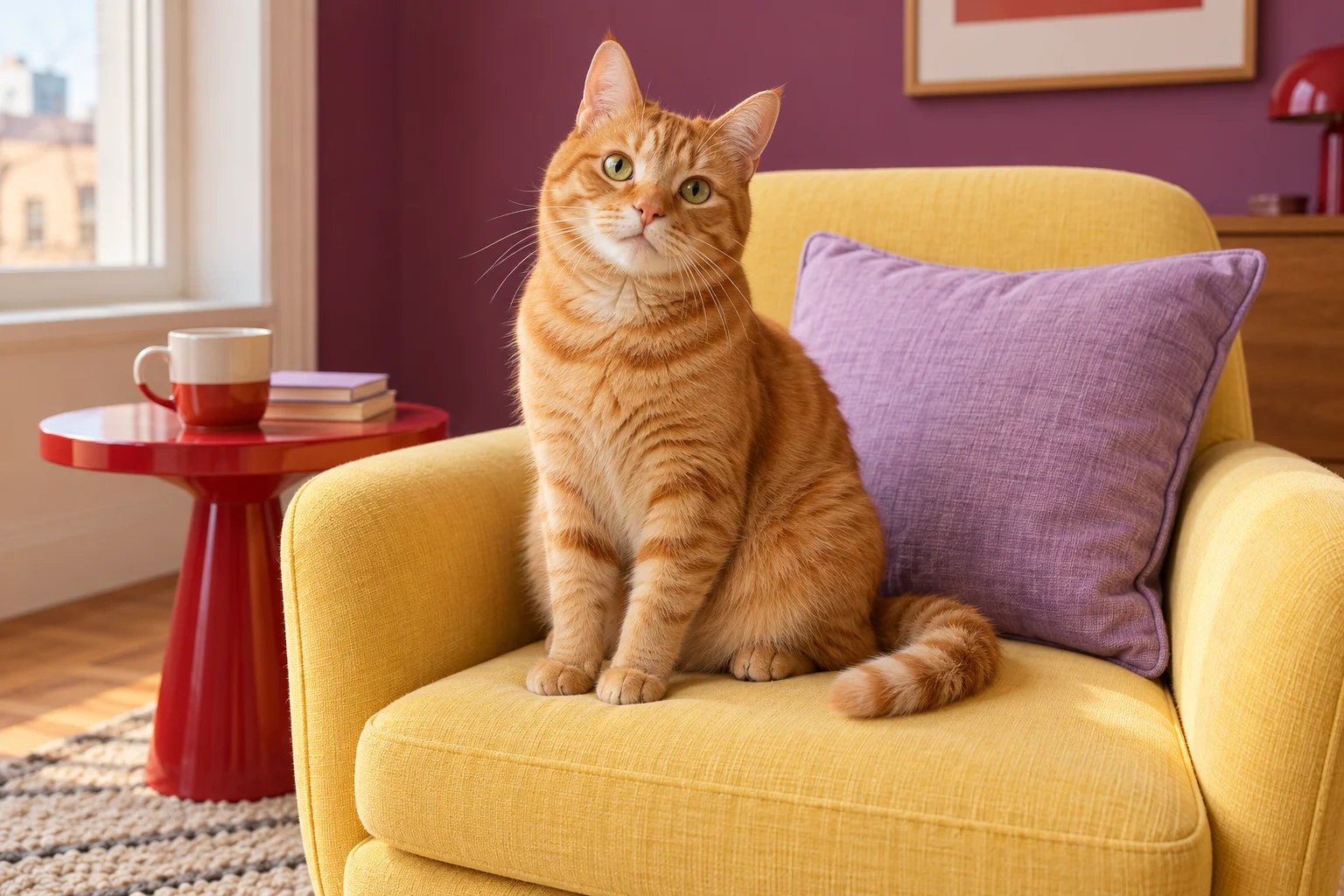
Start a small rotation
You do not need every toy available at once. Set aside a small selection and swap one item when it stops attracting attention. Keep damaged toys out of use, and store strings and wand toys safely between supervised sessions. A rotation is a way to organize attention as well as possessions.
Leave room for the cat to choose
Offer a quiet resting place alongside opportunities to play. An activity should be easy to leave. In a shared room, a simple accessible retreat away from household traffic can be more useful than another gadget. Avoid forcing your cat to investigate a new object.
Introduce puzzles gently
A food puzzle is an optional activity, not a barrier between your cat and all their food. Start with an easy task and watch how they respond. Check suitability and cleaning instructions for the actual product, and follow your veterinary team’s feeding advice. Catit’s Food Tree is one example of a freestanding puzzle; its official page explains the mechanism.
Make a view comfortable and secure
A place near a securely closed window can provide something to watch. Check furniture stability, temperature, access, and blind cords. Never rely on an ordinary insect screen as fall protection. If a window location seems to distress your cat, offer another resting option away from it.
Keep a one-week observation note
Record what your cat chose, what they ignored, and whether the activity was easy to put away and clean. This is a better shopping brief than a list of trending toys. Keep the successful activities and retire the clutter.
Make it work in your home.
Turn your space, budget, and pets into a starting setup you can print and refine.
Create your apartment planSources & further reading
These are general home-planning ideas, not veterinary, structural, or legal advice. Follow product instructions and seek qualified help for your pets’ individual needs. Read our editorial standards.