
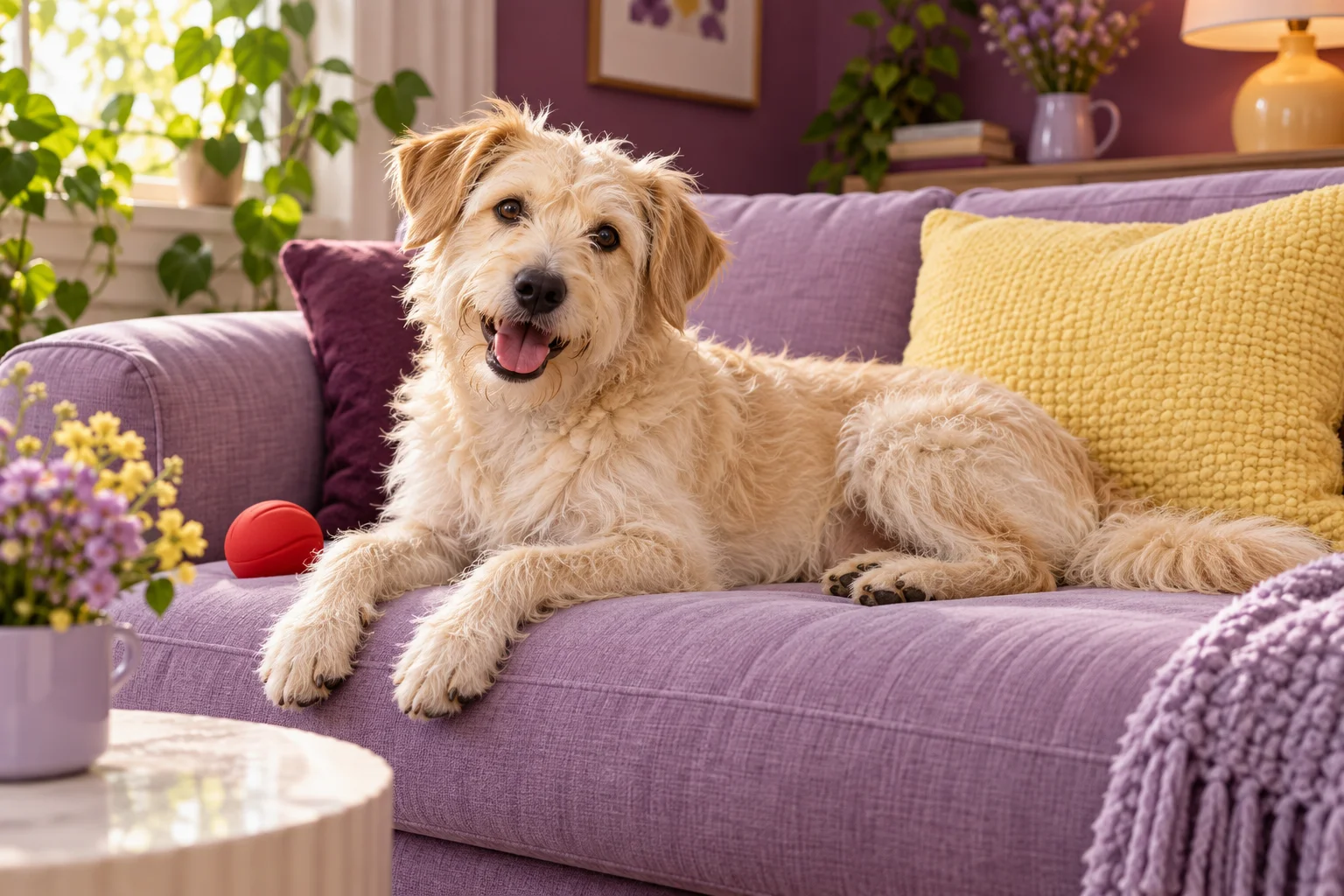
Start at the front door
The best apartment setup begins before the walk. Choose one reachable place for the lead, waste bags, towel, and other everyday supplies. Keep them away from chewing reach. A small box on existing furniture can work; adding a storage system is optional. Leave the doorway clear so arrivals are easier to manage.
Make a resting place that stays a resting place
Pick a spot where your dog can settle without being repeatedly stepped over. Measure the space with the dog stretched out, not just the folded bed dimensions. Think about radiator heat, drafts, and busy household routes. A washable cover may be more useful than a fashionable silhouette.
Plan the day as well as the room
A small home does not tell you how much exercise, company, or mental activity an individual dog needs. Plan suitable outdoor time, toileting opportunities, and enrichment around your dog. Dogs Trust’s ownership guidance is a useful starting point; seek individual advice when routines are difficult.
Keep the floor flexible
Store a few suitable activities and bring one out at a time. That leaves the walking route open and makes inspection and cleaning easier. Give each dog a quiet option away from shared activity. If you live with a cat as well, protect the cat’s resources and escape routes rather than treating every space as communal.
Observe before upgrading
For one week, note which resting spot is used, which doorway becomes crowded, and which supplies are always missing at walk time. Solve that small problem first. You may need a better routine or a relocated item rather than a larger shopping basket.
Make it work in your home.
Turn your space, budget, and pets into a starting setup you can print and refine.
Create your apartment planSources & further reading
These are general home-planning ideas, not veterinary, structural, or legal advice. Follow product instructions and seek qualified help for your pets’ individual needs. Read our editorial standards.